1. Human Resource Development and Quality of Life Improvement
State property is a highly significant real estate asset for the administration of the government. It is essential for achieving the economic and social policies established by the state to promote national development. The use of state property for social purposes under government policy can be categorized as follows:
State property supports government activities by serving as locations for public schools and universities.
State property supports government initiatives by being used as sites for public hospitals, helping to enhance the overall health of the population.
The Treasury Department collaborates with the National Housing Authority (NHA) to develop housing projects for low-income citizens by utilizing state-owned land nationwide. The NHA is allowed to lease the land at the lowest possible rate in order to construct affordable housing for low-income residents.
The NHA’s projects typically include rental buildings for low-income families in urban areas and for government officials. These may consist of multipurpose studio units or one-bedroom units ranging from 24 to 31 square meters, or row-house buildings, depending on the economic, social, cultural, and environmental conditions of each area. The goal is to target provinces where the need is high, providing low-income individuals and those unable to afford home ownership with access to standard housing at manageable rental costs.
Initially, the projects will be developed in 20–25 provinces, including Nonthaburi, Chonburi, Nakhon Pathom, Surat Thani, Kanchanaburi, Phetchaburi, Songkhla, and other areas deemed suitable by the NHA. The Treasury Department will charge the lowest land rental rate, with lease terms of approximately 30 years, to help reduce development costs and ensure that rental fees are affordable for low-income residents.
The Treasury Department collaborates with the NHA on the “Din Daeng Housing and Urban Renewal Project”, located on state property registered as Plot No. K.T. 270370, covering approximately 216 rai. The NHA is responsible for developing replacement housing for existing residents, while private investors are responsible for commercial development.
The Treasury Department also cooperates with the Community Organizations Development Institute (CODI) on housing projects for low-income and urban poor populations through the “Baan Mankong” (Secure Housing) Program. Two supported project sites include:
Khao Saeng Community, Songkhla Province (S.K. 19)
Laem Rung Rueng Community, Rayong Province (R.Y. 94 and R.Y. 110)
These projects focus on improving living conditions in informal settlements located on state-owned land, addressing insecurity in housing tenure. They emphasize collaborative development involving community participation.
2. Development of Natural Resources and the Environment
Public Park Development Projects
• “Chaloem Kanchanaphisek Park” – Bang Si Muang Subdistrict, Mueang District, Nonthaburi Province
The park serves as:
• “Benjasiri Park” – Sukhumvit Road, Bangkok
Designed as a highly frequented community park, it emphasizes:• “Benjakitti Park” – Khlong Toei Area, Bangkok
The area was planned as a large green open space including:
• Sports Field and Public Park – Kiakkai Intersection, Bangkok
• Community Public Park Development Projects
This follows the Cabinet resolution of 19 September 1995, which directed the Ministry of Finance to allocate state land for public parks, recreational spaces, and other public-benefit activities.
• State Property Use for Religious Purposes
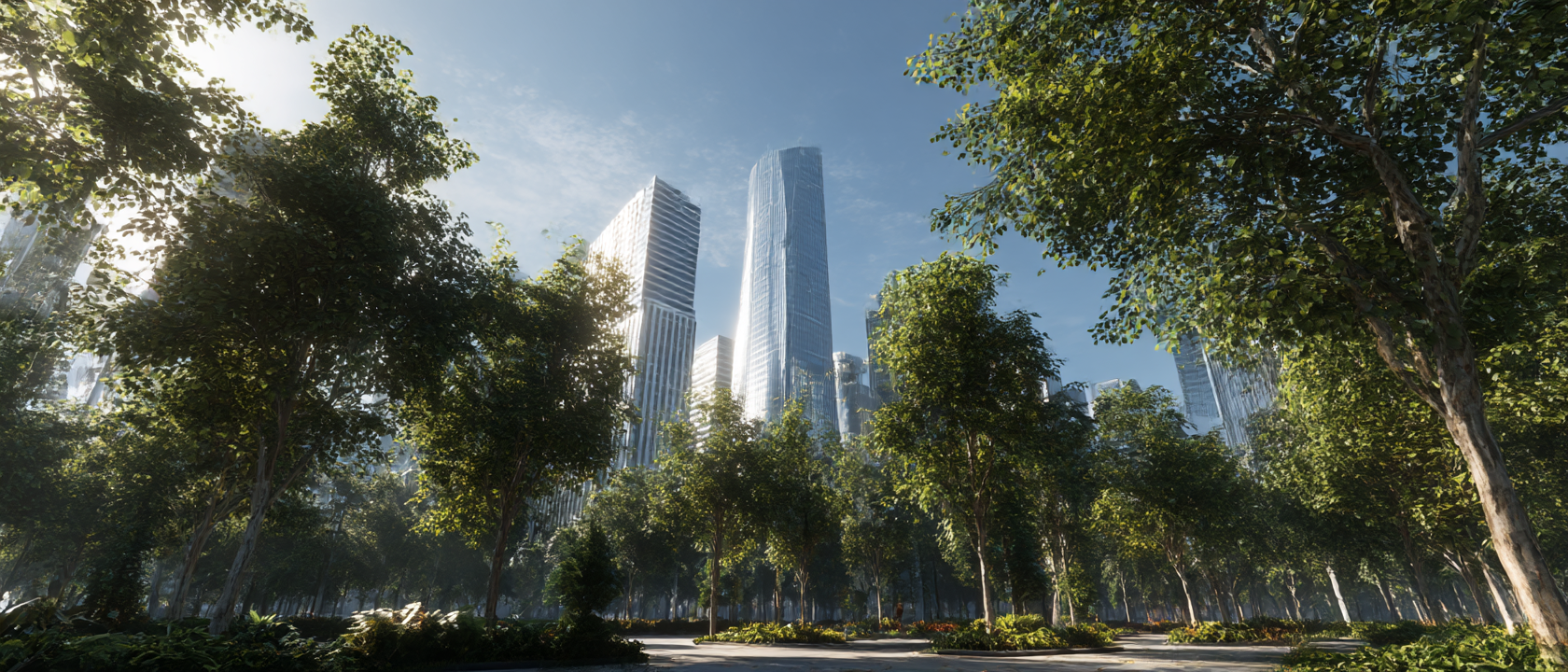
The Treasury Department, Ministry of Finance, has a policy to develop both large and small public parks to improve the quality of life and mental well-being of the population, as well as to preserve the urban environment. Examples of these projects include:
Located on approximately 100 rai of state property, including additional acquired land, this park was established in commemoration of the 50th anniversary of His Majesty the King’s accession to the throne. It also fulfills His Majesty’s initiative to provide more public parks for recreation.
A habitat for riverside plant species and other vegetation as permitted by the natural environment
A waterscape area supporting aquatic life
A Thai-style landscaped garden, utilizing the area’s naturally abundant water resources throughout the year
On 19 December 1989, the Cabinet resolved to relocate the Meteorological Department from state property on Sukhumvit Road to a new location. The Ministry of Finance, through the Treasury Department, was then assigned to construct a new public park to commemorate Her Majesty Queen Sirikit’s 60th Birthday Anniversary in 1992.
Built on approximately 30 rai of state property on Sukhumvit Road, Benjasiri Park is considered an oasis within a dense commercial district lacking open recreational space.
Extensive greenery
Safe pedestrian circulation
Inclusive public use
Features include botanical gardens, decorative rock gardens, jumping fountains, sculptures, and other amenities.
Since Bangkok Metropolitan Administration (BMA) had sufficient budget and capacity to manage the park, the Cabinet approved the transfer of the park to BMA on 12 September 1992. The official handover took place on 4 May 1993.
On 28 May 1996, the Cabinet approved the earlier resolution from 17 October 1995 to relocate the Tobacco Authority of Thailand’s factories to new sites:
Factory 6 → Don Chimpli Subdistrict, Bang Nam Priao District, Chachoengsao
Factory 7 → Mae Jo, San Sai District, Chiang Mai
The Ministry of Finance then designated the former factory site in Khlong Toei for development into a major public park to commemorate Her Majesty the Queen’s 5th Cycle Birthday Anniversary. Her Majesty graciously bestowed the name “Benjakitti.”
The park is also part of a royal initiative to enhance quality of life and environmental sustainability by maximizing the social benefit of state property.
A forest park
Water features
Health and exercise areas
Gardens of rare plants
Literary-themed botanical gardens
Project funds totalled 180 million baht (from Tobacco Authority profits paid to the government). Design and construction began in FY 1997, with Phase 1 scheduled for implementation by FY 2000 onwards.
The Ministry of Defence transferred 30 rai 80 square wah of state property on Thahan Road, Dusit District—previously used as a textile factory—to the Ministry of Finance. The Ministry then transferred it to BMA for constructing a sports complex and public park to commemorate His Majesty the King’s 6th Cycle Birthday Anniversary on 5 December 1999.
The Treasury Department supports government agencies and local administrative organizations in using state property to build community parks nationwide.
These projects aim to:
Improve public health through sports and exercise
Increase green space in local communities
Restore and enhance the environment
The Treasury Department has therefore implemented numerous large, medium, and small park projects on state land. Additionally, it continues to cooperate with various government agencies and local authorities on social and environmental state land development.
The Treasury Department also authorizes the use of state property for religious activities of all faiths, such as for the establishment of temples, mosques, and churches.
The Treasury Department is revolutionizing the management of state property! Moving forward with the “VALUE” strategy to increase the value of national assets, it aims for a 20% increase in returns by 2026, transforming its role into the “Department for Adding Value and Appropriateness of National Assets” to comprehensively improve the quality of life for Thai people.




 English
 ไทย
ไทย


